Learning the Language of Electronic Music
Having learnt the materials and structure of some electronic music, I am also getting familiar with the language associated with it.
I initially wanted to write a general reflection on the use of various electronic music platforms and apps I’ve recently tried out, but I got stuck on the first one! Browsing the Ronald5 Studio very casually, I realised I could even design my Technology-infused Project entirely with it!
This web-based software was created in collaboration with sound designer Yuri Suzuki to celebrate Roland’s 50 years of developing electronic music-making devices and to create “a digital reworking of some of their most famous and influential devices”.
Roland presents Roland50 Studio as “a professional sounding online musical interface” that allows you to record and share your music. This is an update of 808303.studio and includes
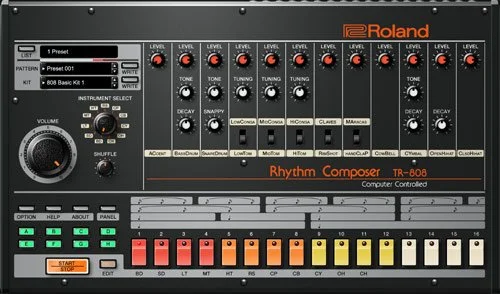
the TR-808 drum machine:
www.roland.com
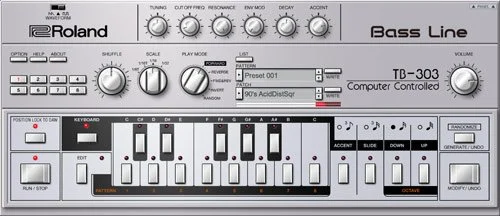
the TB-303 bass synthesiser:
www.roland.com
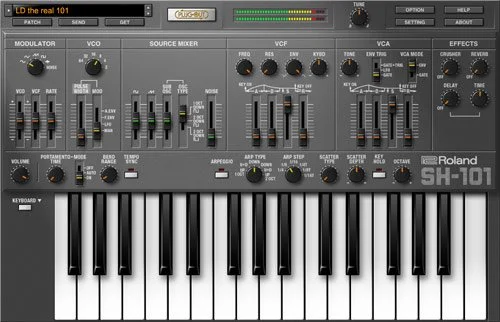
as well as the SH-101 synthesiser:
www.roland.com
and “more sounds” as part of this update. As producer Risa T comments in a video masterclass, these are “iconic Roland instruments” made accessible through a free online platform.
These are already examples of electronic music vocabulary that we are using, and as we go through this blog, I will refer to Risa’s video tutorial/masterclass to highlight more of this vocabulary. At the same time, Yuri’s idea of creating a “fun” platform for sound exploration is in line with Kuhn and Hein’s (2021) emphasis on “joy” in learning. Finally, this blog is also an opportunity to address some of the gaps in my understanding of popular music genres as an educator, an idea I referred to in my previous post when quoting Dunbar-Hall (2000).
*
Risa says that the idea in creating the Roland50 Studio as a simplified interface was to create a “fun” and “easy” platform. While explaining how the TR-808 works, she says:
“…but you don’t need to know all those names; you’re going to hear each sound as you experiment.”
She explains “step sequencing” as making music with dots (steps) and rows to create a looping “progression”, describing it as an “intuitive” and “fun” way of making music. There are 16 “steps” that play “in a loop”. A set of 16 steps is called a “pattern”. In her demonstration, Risa starts with a “four-on-the-floor” pattern (one bass drum beat every four steps) on the TR-808. This is common, she says, in dance music genres. She creates a pattern with bass drum and claps and calls it “a simple House Beat”, adding that we can change the “feel” of a pattern by moving the steps around. She then creates a slower pattern and says that “it’s more hip-hop and down-tempo kind of vibe”. Next, she makes it faster and says “it becomes more garagy” as she turns up the shuffle knob. The “shuffle” knob can swing the rhythm. Finally, she makes something even faster and says, “it’s more jungle and drum and bass kind of feel”.
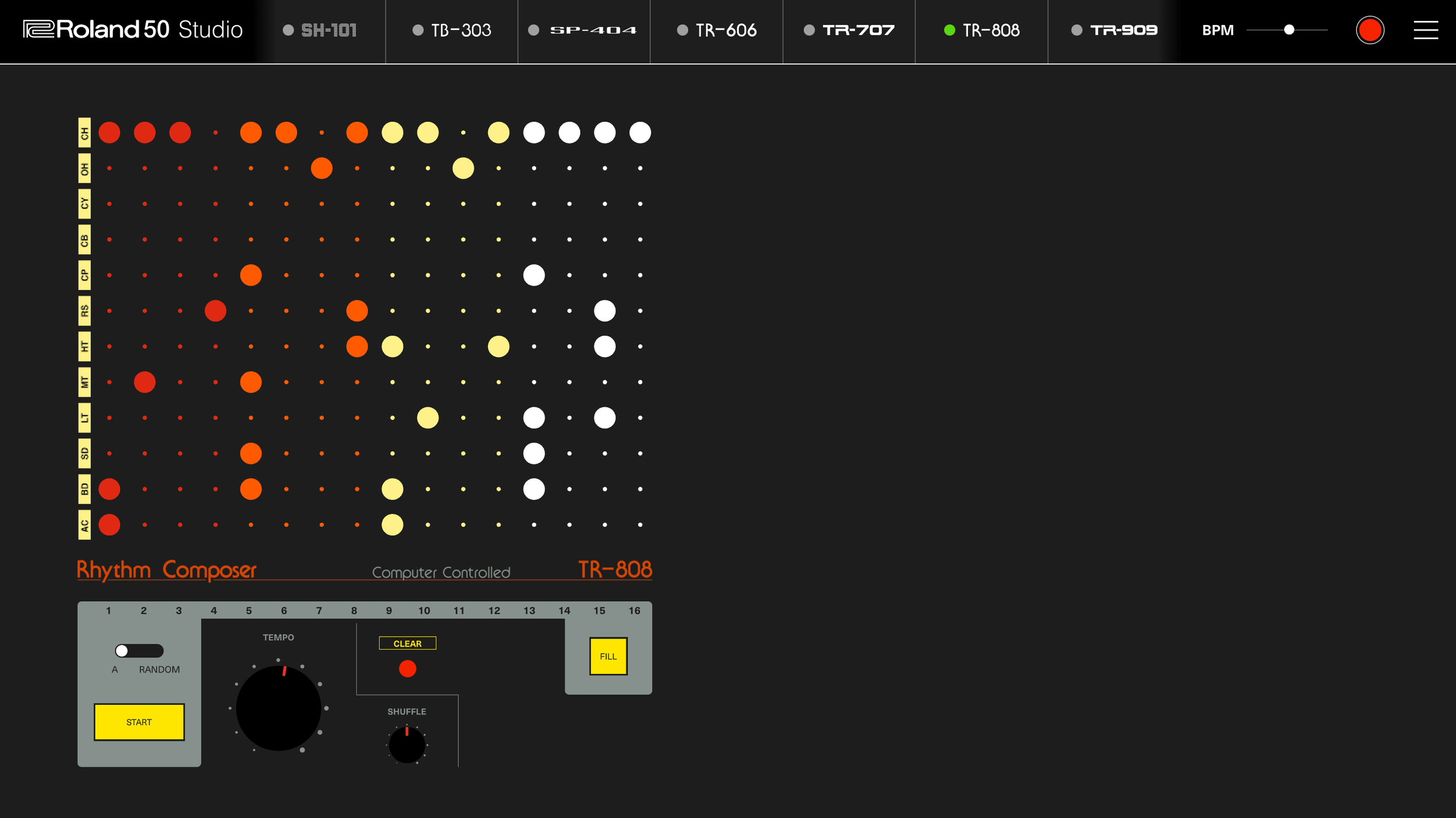
TR-808 on Roland50.studio
On the Roland50 Studio, all instruments automatically play in sync once turned on, and you can change the “global tempo” in the top-right corner of the screen. However, you can only use three instruments at a time.
The SH-101 is for creating melodies. On the SH-101, you can only play one note at a time. It has an arpeggio button and a set of “controls”. About the “source mixer” section, Risa says:
“Imagine that you have three sounds layering on top of each other, and you can balance the volume of each sound here.”
I didn’t quite get this part!
Then she tries them out and says, “I’m going to solo each one.” The “SUB OSC”, she says, “layers lower notes”. You can also transpose the notes by an octave, add “a gliding effect” with portamento, and use the “bender”, whose rate can be customised by the MOD rate control. Then there’s the VCF, which is a “filter”. Risa says that it can make a sound “brighter” or “duller”. This is done using different sliders, mainly the “frequency cut-off” slider. The other sliders work in combination with it and can “add more character”. The rate of all these modulations is affected by the rate slider.
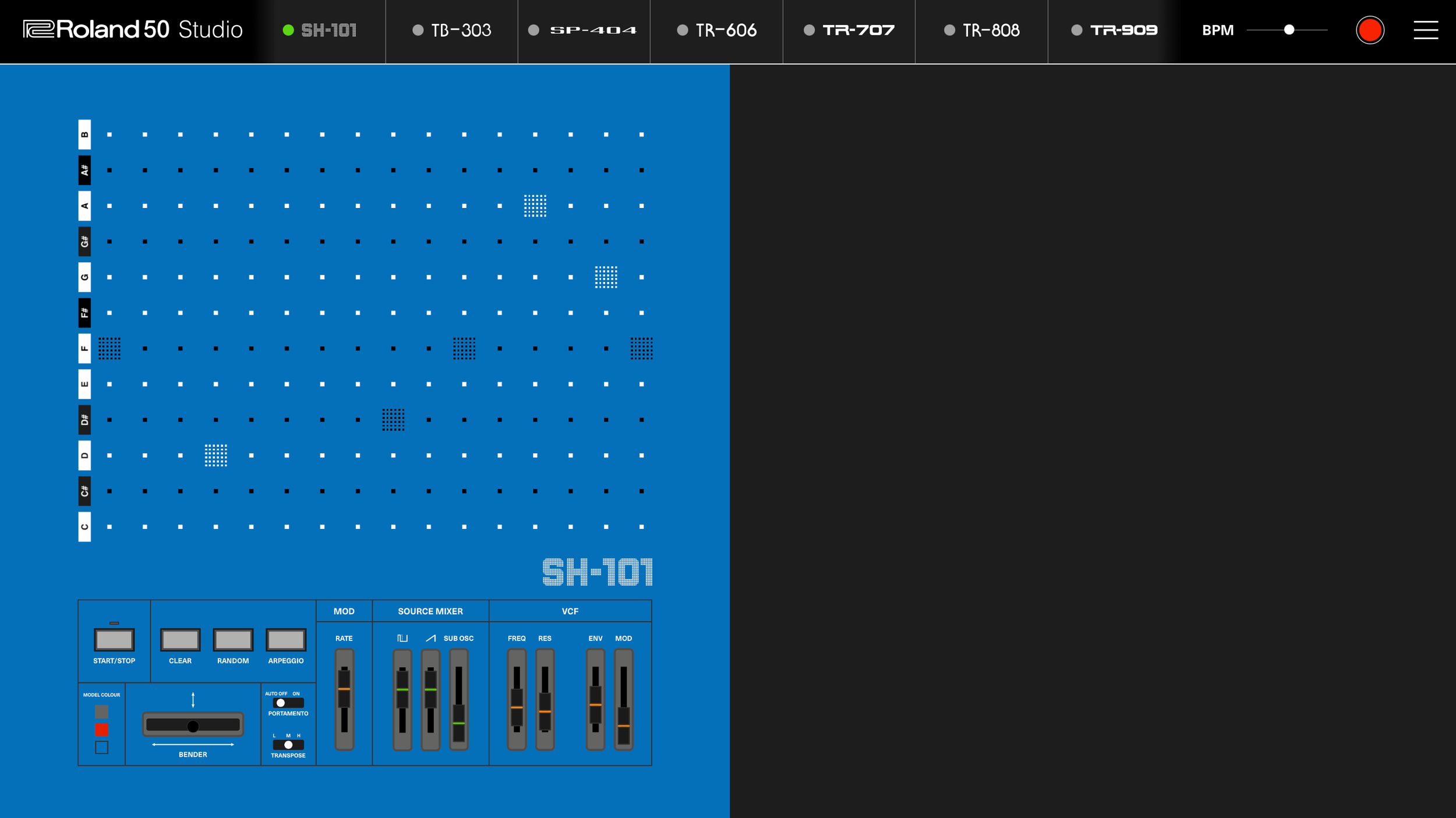
SH-101 on Roland50.studio
The TB-303 is a bass synthesiser, and its interface is similar to that of the SH-101. It also includes filter controls. “Decay” allows you to “adjust the note end”, while “accent” adds more “intensity”.
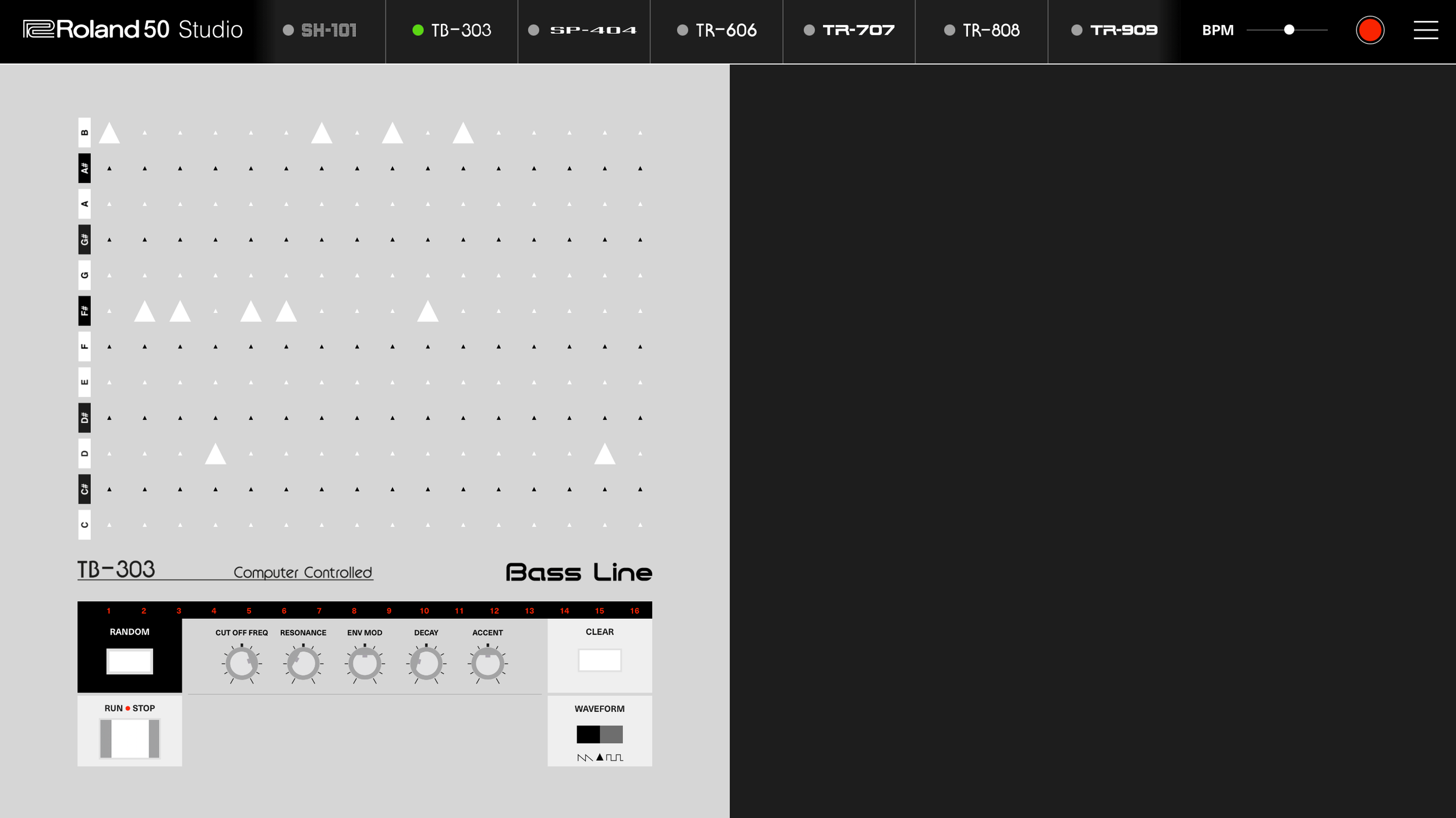
TB-303 on Roland50.studio
The SP-404 is a “sampler”. With it, you can record a new sound, add effects, and use it as an instrument. It comes with some “pre-recorded samples”. There are eight greyed-out rows on the SP-404 where we can record our own sounds. With this, we can record our voice or any other sound source. Regarding timing, Risa says:
“The timing can be a bit tricky, but recording a random sound can lead to a really interesting outcome… don’t worry too much about the timing and just have fun.”
Once the short recording is done, we can select areas within the rows to create interesting sounds. Then there are effects: delay (echo), pitch shift, MFX, and reverse. There are also control knobs to change the amount or intensity of these effects. With MFX, you can add saturation and distortion effects.
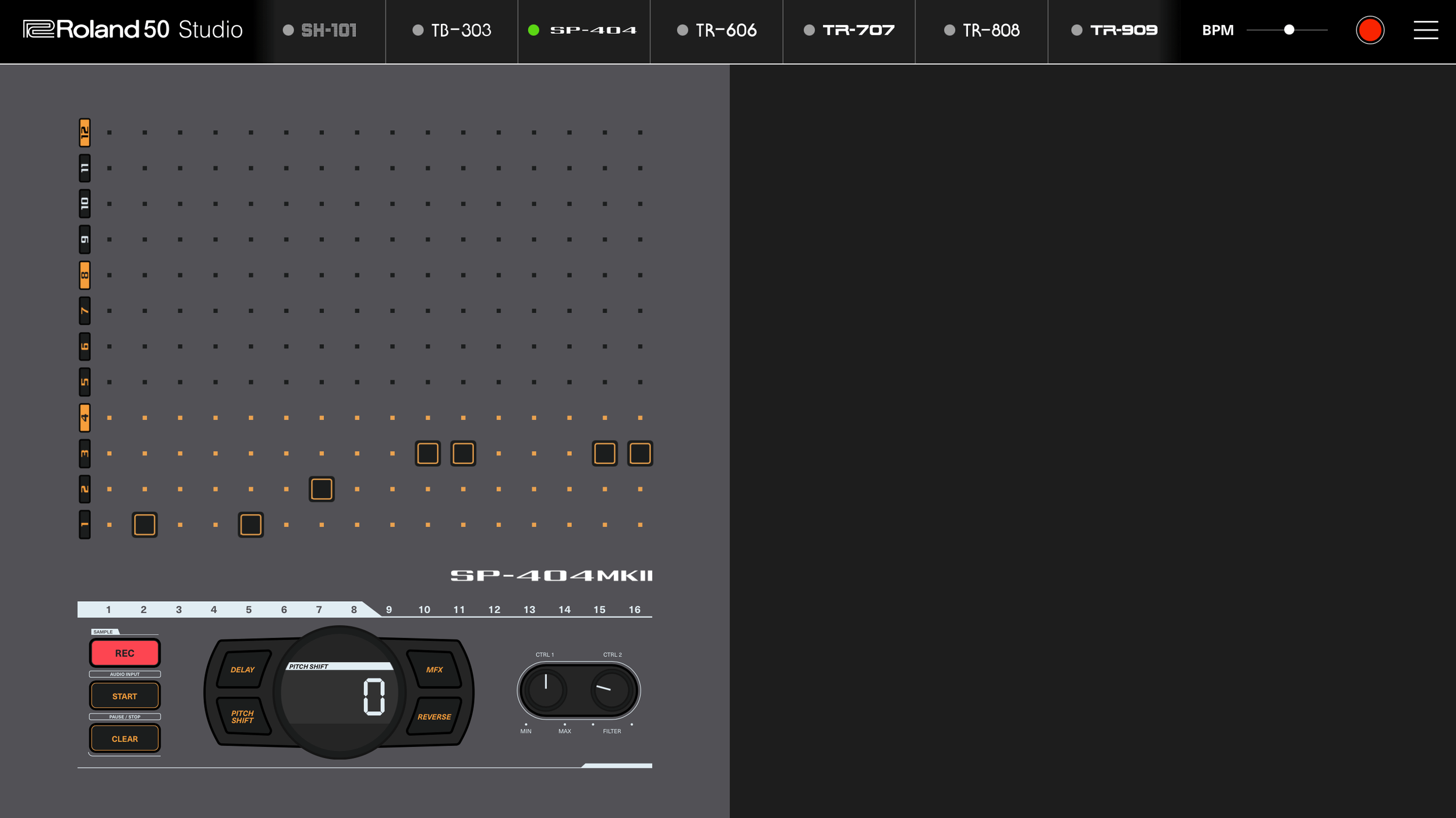
SP-404 on Roland50.studio
At any point, you can start recording and, as you go, “add movement” to your track by changing parameters in real time to make it more diverse and interesting. Once done, you can export and share your music.
Here are some of my experimentations: