Do these beautiful ideas about inclusive education that we encounter in recent scholarship, and that are often part of the required readings in teacher education courses, apply to tertiary education too? We talk a lot about culturally diverse students in schools, but rarely about culturally diverse teachers and education students.
Why is it that we do not practise differentiation in teacher education, and even more broadly, in higher education? Why don't we consider the cultural and psychological differences between students in higher education? How can we resolve this huge contradiction?
Given that we live in a multicultural society, the lack of attention to these individual and cultural differences between students in higher education is shocking. In higher education, students and teachers are often distanced from one another. Teachers seem not to know or care about students' backgrounds because they are too busy keeping up with tons of other responsibilities.
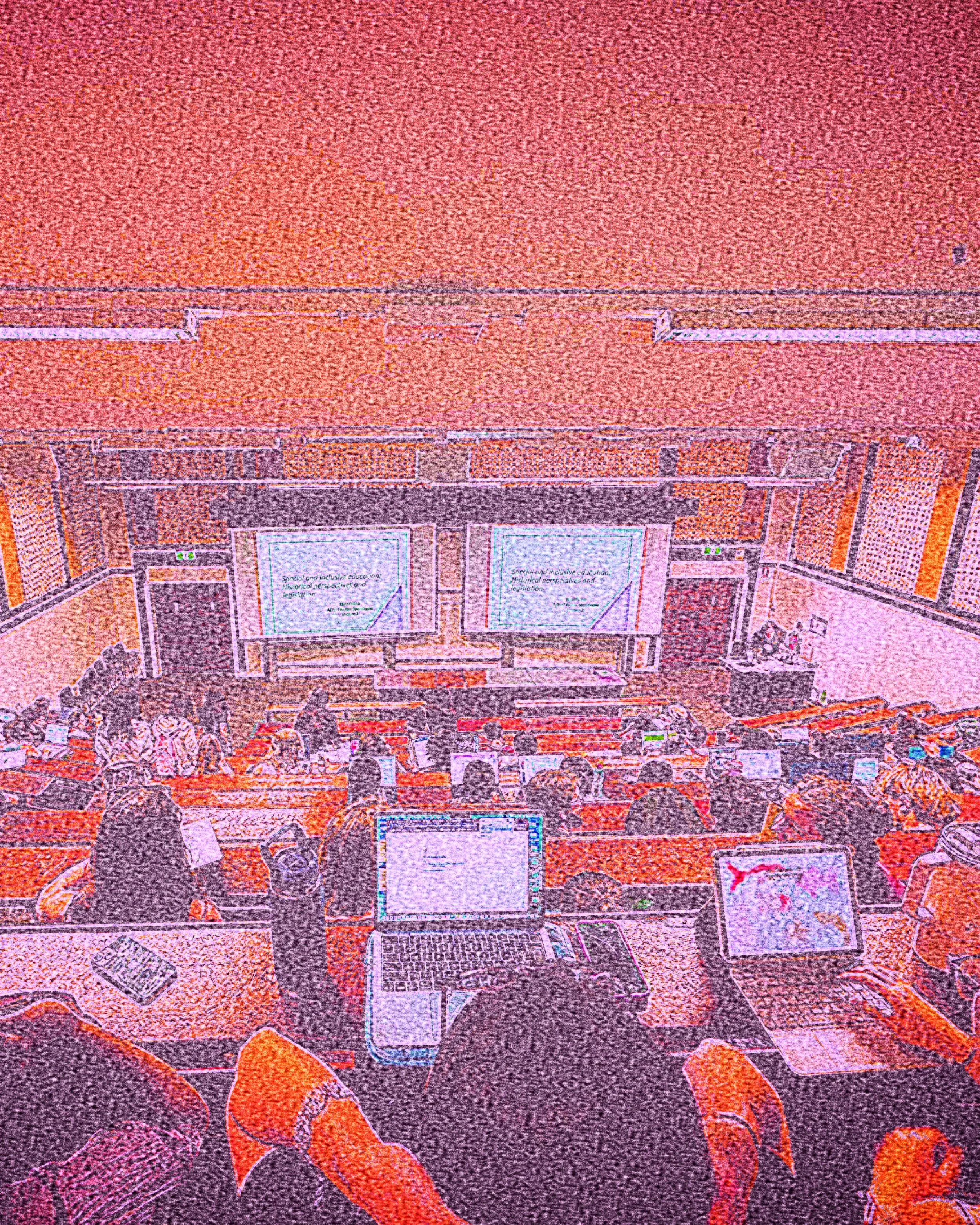
The assumption that students are all on the same page is not an attitude I would expect from a teacher at any level. Students walk out of one lecture having heard lots of wonderful ideas about inclusive education, only to walk into another and feel like they are not even being noticed by the lecturer. One lecturer puts 5,000 words on a single slide and presents it as if it were a research presentation at a conference for education scholars. The audience is made up of primary and secondary teacher education students from diverse backgrounds. I wonder what the benefit of presenting information in this way is. I have seen students sleeping, scrolling through social media or shopping online in some of these classes. Yet some of these lecturers even joke about students doing their online shopping during class. But why?
Some lecturers create puzzle-like slides and compete with one another to produce the most complicated tables and graphs. Some units of study are so wordy and theoretical, and use such sophisticated language, that they sometimes feel as though they are intentionally designed to filter out anyone whose first language is not English. Some scholars believe that the Australian government does the same thing by creating LANTITE “as a checkpoint for keeping culturally diverse candidates out of the teaching force” (Barnes & Cross, 2021, as cited in Tuxworth & Dwyer, 2023, p. 51). I have seen the struggles and frustrations of many students with these “one-size-fits-all” exams. No wonder that “there are significant differences between the identities of students and teachers in Australian schools” because “the diversity of the student population in Australian schools is far greater than the diversity of educators” (Tuxworth & Dwyer, 2023, p. 48).
“A more diverse teaching
workforce would benefit all students, and
especially those from culturally and linguistically
diverse backgrounds.”
Tuxworth & Dwyer, 2023, p. 56
We all know the benefits of having culturally diverse teachers in schools:
“Minority teachers are well perceived by minority students because they may have experiences navigating cultural stereotypes and can support students to combat stereotypes”
(Cherng & Halpin, 2016, as cited in Tuxworth & Dwyer, 2023, p. 50).
During my prac, I witnessed students with backgrounds similar to mine being absolutely silent and feeling uncomfortable in their classes. However, their faces suddenly lit up when I asked them about their day in their mother tongue. They then started asking me questions with enthusiasm.
In the UDL guidelines under engagement, it is stated that:
“Some learners might like to work alone, while others prefer to work with their peers. And, these preferences might vary from week to week or even day to day. In reality, there is not one means of engagement that will be optimal for all.”
(CAST, 2024)
Another “required” article for a unit of study reads:
“Participation is voluntary, in that members are part of the team because they want to be, not because they have to be.” (Spandagou et al., 2020, p. 87)
Yet in many units of study, students are expected to do exactly the same project in exactly the same way. The result is that many group projects turn out to be painfully pointless and disappointing because students simply have to do them. There is no other choice.
In one unit of study, students are given 20 questions to look at. Some students have only read the first four questions, while others have already started talking about their answers. Students are often given the same amount of time to read five pages of text and then discuss them! This is perhaps the most obvious example of leaving people out. We do this in teacher education, yes! Well, good luck creating a diverse educational environment in schools where 40% of students (NSW) come from homes where languages other than English are spoken (NSW Government, Centre for Education Statistics and Evaluation, 2026).
Research shows that culturally diverse teachers “can serve as role models for their students who share similar cultural backgrounds and encourage minority ethnic students in navigating systems and obstacles in society (Cherng & Halpin, 2016; Fitzpatrick, Henninger, & Taylor, 2014; Griffin, 2018, as cited in Tuxworth & Dwyer, 2023, p. 48). Yet these teachers have reported higher levels of stress in the workforce (Soong et al., 2020, cited in Tuxworth & Dwyer, 2023, p. 51). Well, are you wondering where this stress begins? At university!
*
What would I do if I were teaching pre-service teachers?
I would actively encourage culturally diverse students to share their views, experiences and ideas. I would invite them to reflect on how their schooling experiences might have differed and what perspectives they could bring to our discussions. I would also provide opportunities for students who have studied in different countries to present on other schooling systems and educational approaches, allowing the whole class to learn from their experiences. This way, students would feel that their backgrounds and experiences are recognised and valued.
I would create engaging and diverse activities, teaching resources and assignments to make sure I do not leave anyone behind.
I would set aside time for students who feel they are falling behind or need extra help, and clearly explain topics they might find difficult. I would not limit my support to saying, "Send me an email if you have any questions." I would approach students myself and ask whether they have any questions or anything they would like to share.
I would keep track of students for whom English is not a first language and monitor their engagement and progress.
I would ask for student feedback throughout the semester, not just at the end. By then, it might be too late to make meaningful changes.
I would rotate seating arrangements and student groups to make sure everyone has opportunities to meet and work with students from diverse backgrounds.
School teachers are likely to teach students for whom English is not a first language. I would create activities and ongoing opportunities for students to learn about other languages through their peers. I would make this a regular part of my teaching, rather than treating it as a one-off activity.
*A note:
There are certainly wonderful lecturers who genuinely care about their students, make an effort to understand their backgrounds and put inclusive education into practice. I have had the pleasure of learning from some of them too. This post is not about dismissing those efforts, but about questioning the gaps between what we teach about inclusive education and what we sometimes practise in higher education.
References:
CAST. (2024). CAST Universal Design for Learning Guidelines version 3.0.
https://udlguidelines.cast.org
Centre for Education Statistics and Evaluation. (2026). Language diversity in NSW Government schools, 2025. NSW Department of Education.
https://education.nsw.gov.au/about-us/education-data-and-research/cese/publications/statistics/language-diversity-bulletin/language-diversity-bulletin-2025
Spandagou, I., Little, C., Evans, D., & Bonati, M. L. (2020). Inclusive education in schools and early childhood settings. Oxford University Press.
Tuxworth, J., & Dwyer, R. (2023). The crucial need to support culturally diverse students in Australian music classrooms. Australian Journal of Music Education, 55(1), 48–59.